So if Europe is serious about protecting itself, it needs Ukraine just as much as Ukraine needs the
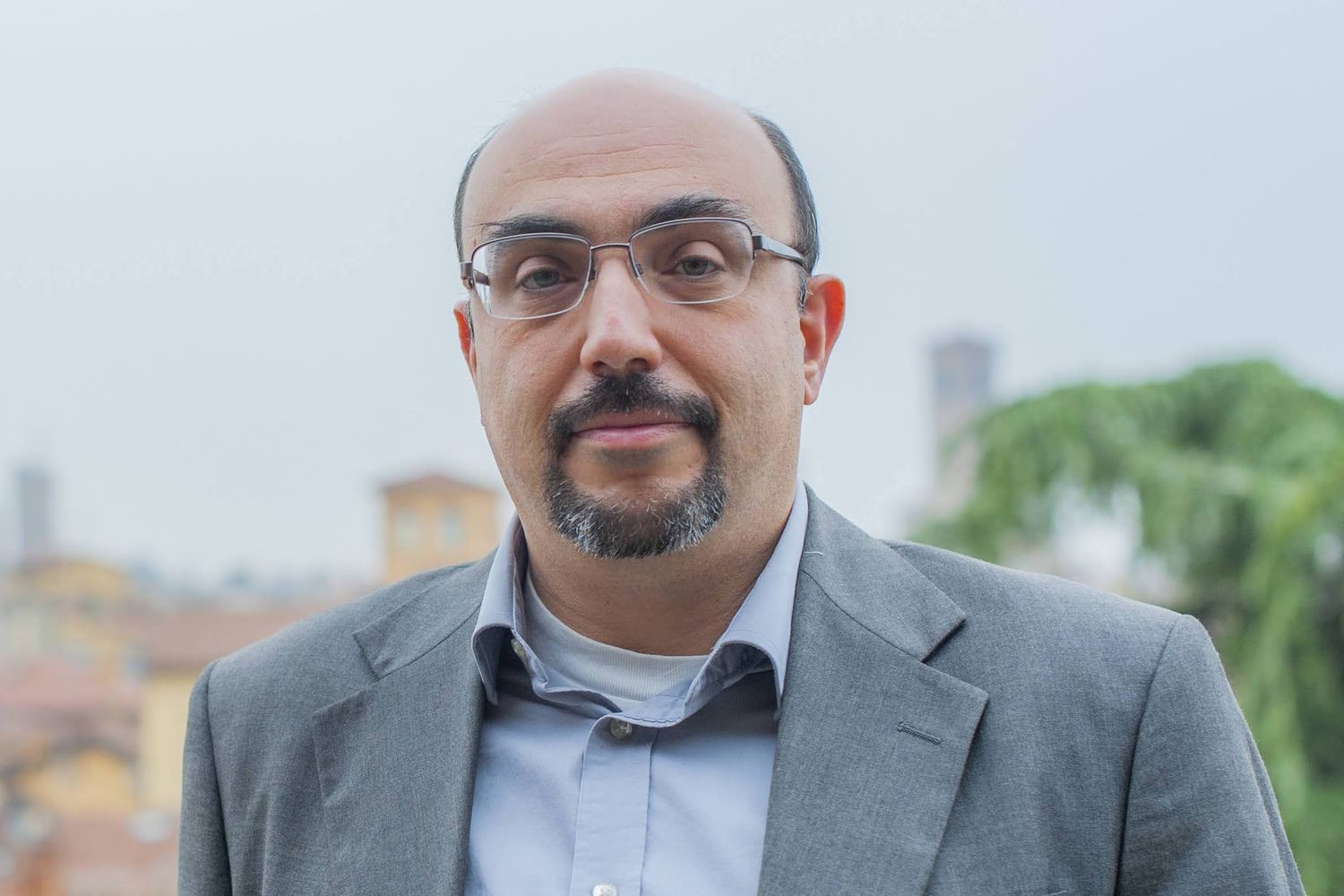
“So if Europe is serious about protecting itself, it needs Ukraine just as much as Ukraine needs the EU”
Interview with Eugene Finkel
Eugene Finkel is Kenneth H. Keller Professor of International Affairs at the Johns Hopkins School of Advanced International Studies (SAIS). His research lies at the intersection of political science and history and focuses on how institutions and individuals respond to extreme situations, including mass violence, state collapse, and rapid political change. His work also examines the politics of historical memory, genocide, and the long-term political consequences of violent conflict in Eastern Europe and beyond.
He is the author of several influential books, including Intent to Destroy: Russia’s Two-Hundred-Year Quest to Dominate Ukraine (Basic Books, 2024), Ordinary Jews: Choice and Survival during the Holocaust (Princeton University Press, 2017), Reform and Rebellion in Weak States (Cambridge University Press, 2020, with Scott Gehlbach), and Bread and Autocracy: Food, Politics and Security in Putin’s Russia (Oxford University Press, 2023, with Janetta Azarieva and Yitzhak M. Brudny). His articles have appeared in leading journals such as the American Political Science Review, Journal of Politics, Comparative Political Studies, and Comparative Politics, and he regularly contributes analysis to outlets including Foreign Affairs, The Washington Post, and the Los Angeles Times.
O. Kandyuk: In your book Intent to Destroy…, you trace a historical continuity in Russia’s strategies of suppressing Ukraine. Why have these strategies proven so persistent over centuries, despite changes in political regimes and the international context?
E. Finkel: There are two main reasons.
First, these strategies are persistent because they are not about regimes or governments. They are about how Russia perceives itself, its own history, and who belongs to the “Russian world” – however one defines that term. That is why this is not about Putin or about any specific government.
It is about Russian identity: how Russians understand who they are. In this view, it does not really matter whether you are a monarchist, a conservative, or to a large degree even a liberal. The basic perception remains that Ukrainians and Russians are the same people, that Ukraine is historically part of Russia, and that Russia therefore has a right to have a say over what Ukraine does, who Ukrainians are, and what kind of leaders they choose.
The logic of policy follows from this idea that they are the same people – that Ukrainians and Russians are brothers. Not only brothers, but that Russians are the elder brothers. Russians, Ukrainians, and Belarusians are seen as three branches of the same Russian people, but Russians are, of course, on top, while Ukrainians are the younger brothers.
So many Russian policies ultimately come down to the question: who do you think you are, doing something without asking our permission first? This has remained consistent for roughly two hundred years because the understanding of what Russia is and where its history begins – namely in Kyiv – has not changed. Russian governments, regardless of regime type, have not attempted to tell their people a different story about what Russia is and what Ukraine is.
That is the identity component. There is also a basic security component, which has not changed either. The geopolitical geography of Europe remains the same. Russians are as nervous about the West today as they were in the past, and they are also nervous about democracy reaching Russia from the West through Ukraine and through Ukrainians, just as they were two hundred years ago.
So the story I am telling is persistent because the narrative about what Russia is has not changed, and the basic structural realities have not changed either. In my view, it does not really matter who comes after Putin. As long as the understanding persists that Russian history starts in Kyiv, that Russians and Ukrainians are the same people, and that Ukrainian is merely a regional dialect of Russian, the next government will probably hold a similar attitude. This does not necessarily mean they will try to invade Ukraine again, but the basic perception of what Ukraine is will likely remain unchanged.
O. Kandyuk: According to your analysis, why does the Russian political elite perceive Ukrainian independence not merely as a geopolitical challenge, but as an existential threat to the very idea of the “Russian state”?
E. Finkel: I do not think it is primarily about geopolitics. Security concerns certainly exist, but they are secondary to identity-based views that this land is Russia and should be Russia.
From that perspective, those who think otherwise are not Ukrainians because Ukraine is, in this worldview, a fiction. They are simply bad Russians – brainwashed Russians. And the task, in this view, is to brainwash them back into believing that they are Russians, no matter how many of them are killed in the process.
So this is mostly about identity and about the understanding of what Russia is. From this viewpoint, Russia is incomplete – almost handicapped – without control over Ukraine. That does not necessarily mean formally incorporating Ukraine into Russia, but at least maintaining dominance over what happens there.
For example, Russian elites would probably not be very happy with Ukraine becoming something like a second Belarus, but they might accept it as long as they knew they controlled what was going on there. But Ukraine which is fully independent – that is something they cannot allow.
O. Kandyuk: You argue that Ukrainian political subjectivity undermines not just Russian influence but the very foundations of the Russian imperial project. Is it possible to imagine a European strategy toward Russia that does not attempt to “soften” this clash of identities, but instead accepts its structural nature and builds policy around long-term coexistence with such an rival?
E. Finkel: I do not think it is up to Europeans to fix Russia. Europeans cannot fix Russia and they should not try. Any change must come from within Russia itself.
What Europeans can do, first of all, is recognize that this conflict is not about a particular piece of territory. It is about Russia’s desire for full control over Ukraine. Therefore, half-measures and compromises will not achieve much.
After all, Russians do not trace their history to Luhansk or Donetsk. They trace it to Kyiv, and they want all of it. Recognizing this is the first step.
Second, Europeans can help Ukraine obtain the tools necessary to deal with this situation until and unless Russia changes its narrative. They can also use the tools they still possess to push Russia to confront this narrative.
For instance, something I have argued for a long time is that sanctions should not be lifted until Russia changes its rhetoric and, for example, its school curriculum. I care less about the number of troops, the size of demilitarized zones or other technical arrangements. As long as Russian schools continue teaching children that Russia starts in Kyiv, that Kyiv is the mother of all Russian cities, and that Ukraine does not exist, sanctions should remain in place.
This will not completely change Russian behaviour, but Europe at least has tools that could encourage movement in the right direction. Europe cannot fix Russia.
O. Kandyuk: But do you see signs that Europe is moving in this direction?
E. Finkel: I think there is gradual change. As time passes, there is growing understanding of what lies behind this war and behind Russia’s obsession with Ukraine.
In 2022, and even earlier in 2014, many Europeans would say: this is all about Crimea, or about Donetsk and Luhansk. They would argue that people there speak Russian and therefore Ukraine should simply give these territories to Russia and move on.
But as time passes, people increasingly realise that this is not about territory or about specific security arrangements. It takes time, but Europe is moving in that direction or at least I hope so.
O. Kandyuk: In your article Why Ukraine Is Not Russia, you link differences in hegemonic national identity to Ukraine’s democratic way and Russia’s authoritarian one. Which elements of Ukrainian identity, in your view, have been most decisive for the resilience of Ukrainian democracy, particularly after 2014 and 2022?
E. Finkel: When it came to building post-Soviet political systems, democrats and liberals in Ukraine actually had it much easier than their counterparts in Russia. Ukrainian democrats could say: whatever Russia is, we are not that, and therefore we want to build something different.
They could reject the Russia-centred historical narrative and instead look toward the West – to Poland, to the Czech Republic. If, like both of us, you come from the former Austro-Hungarian parts of Ukraine, you might look to Vienna, drink coffee as if no other drink ever exists, and cultivate a certain Habsburg nostalgia.
Of course, I do not want to romanticise this Habsburg mythology. Not everyone in Galicia or Bukovina is a liberal democrat. But at least it was possible to construct a different story of who Ukrainians are – one oriented toward the West and the Western, democratic world and say: “this, and not the Russian Empire or the USSR is who we truly are.”
Russian democrats did not have this luxury. They could not say they were not Russians and that the Russian history is not who they are. They had to work within a national narrative that carried enormous autocratic political baggage.
That was one factor that helped Ukraine remain more democratic.
Another factor was that the country was so divided that no single group was strong enough to fully take over the government. Lucan Way refers to this as “pluralism by default.” No actor had sufficient power to dismantle democracy completely.
If you look at Ukrainian presidents since 1991, you see a pattern: a Westerner, an Easterner, a Westerner, an Easterner, and so on. Of course, this simplified image – Lviv versus Donetsk, Galicia versus Donbas – was partly caricature. Over time, political identities converged toward something like Vinnytsia – an amorphous central Ukrainian identity – neither strongly Galician nor Russian, but capable of rejecting the Russian authoritarian model.
These were the two key features until 2014: the presence of alternative, pro-Western narratives of identity, and a political system in which no actor was powerful enough to dismantle pluralism.
Then came 2014. The Russian annexation of Crimea and the war in Donbas fundamentally changed the situation. The most pro-Russian regions were no longer fully integrated into Ukrainian politics, and even many those who had previously favoured closer relations with Russia were personally offended by Russian aggression.
After 2014, the movement toward the West became almost predetermined.
That said, Ukraine is not guaranteed democratic stability. War is never good for democracy. The period after the war will be extremely dangerous for Ukrainian institutions, simply because wars transform societies in profound ways.
So Ukrainian democracy is not fully secure. But after 2014 its foundations became significantly stronger, largely because Russia represented an autocratic model and Ukraine wanted to become everything that Russia is not.
O. Kandyuk: Yes, but we still have a chance to become anti-Russian autocracy.
E. Finkel: Yes, that is obviously a danger. I do not think it will happen, though. Ultimately, everything will depend on how the war ends.
There is a possible scenario in which the state and its institutions collapse, and forces from either side take over the country – either the far-right Ukrainian nationalist camp or pro-Russian actors. These forces do exist, but I would not overestimate their strength.
The risk is there, but I do not see either of these groups being capable of dismantling Ukrainian democracy. Over the past twenty years, every time someone attempted to undermine Ukrainian democracy, hundreds of thousands of people returned to the Maidan to protest.
O. Kandyuk: You have written that Ukrainian society has become truly consolidated. What, in your view, has been the key driver of this consolidation, and to what extent has Russian aggression accelerated the formation of a Ukrainian political nation?
E. Finkel: I would not say Ukrainian society is fully consolidated. Regional and linguistic cleavages still exist, but they are far less politically significant than before.
Before roughly 2010–2011, Ukraine could easily be described as a divided country. That description no longer applies. Ukraine has developed a basic civic identity centred on citizenship and political commitment to the Ukrainian state, which has become more important than linguistic or regional differences.
Russian aggression played a major role in this transformation because it made pro-Russian orientations politically untenable for a large part of society.
War also produces a classic “rally-around-the-flag” effect. Serving in the military together diminishes regional divisions. Whether someone is from the South, East, or West becomes less important when everyone is fighting the same war.
Population movements also mattered. After 2014, Russian could often be heard on the streets of Lviv without causing controversy, because people understood these were refugees from Donbas. Before 2014, language policing in public spaces was far more common.
Finally, time itself plays a role. Ukraine has now been independent for more than thirty years. Several generations have grown up without any lived experience of another state.
For younger generations, the Soviet Union is not a superpower that sent people into space. It is a distant memory associated with shortages and queues for bread. Those born in independent Ukraine simply do not know any other country.
O. Kandyuk: If we apply this perspective to the European Union, could the war in Ukraine lead to a deeper consolidation or political integration—of the EU itself, perhaps contributing to the emergence of a stronger “hegemonic” European identity?
E. Finkel: Possibly, although I do not claim deep expertise on the EU.
What we do see is growing recognition that Russia represents a serious security threat. This perception is no longer limited to Eastern European countries like Poland, the Czech Republic, or the Baltic states. It increasingly includes countries such as Sweden and Finland, and most importantly Germany and France.
Southern Europe – Spain or Portugal, for instance – may still perceive the threat somewhat differently, but among political elites in the core of Europe there is a growing consensus.
This has produced pressure for greater integration and for rearmament. Europeans increasingly realise they must rethink security policy, especially as United States is either withdrawing from Europe completely or engaging in things that endanger the EU or directly threatens the EU as in the case of Greenland.
At the same time, there are also counter-tendencies toward disintegration, particularly with the rise of right-wing parties. Viktor Orbán or Fico in Slovakia are not going anywhere soon, and as long as leaders like them remain influential, deeper integration will be difficult.
There is also a paradox. Many people support strengthening Europe’s military capabilities—for example, Germany expanding its armed forces and defence industry. But one could ask: what if a party like the AfD came to power? Would Europeans feel comfortable with a heavily militarised Germany under such leadership?
So this is clearly a moment of crisis. Europe is trying to figure out how to respond, and the outcome could move in several directions. Greater integration is one possibility, but not the only one.
O. Kandyuk: How do you view the argument that a Ukrainian victory and successful integration into the EU could become a “point of no return” not only for Ukraine, but also for Russia – forcing it to fundamentally rethink its identity and even abandon its imperial model?
E. Finkel: I do not think that Ukraine’s integration into the EU – or, for that matter, even Ukraine’s membership in NATO – will become such a decisive fracture point.
After all, we are not talking here about soft identity or soft security. We are dealing with very hard security realities, and we know that the EU cannot provide that on its own. Whether Ukraine is inside or outside the EU, or even inside or outside NATO, it will essentially have to depend on itself.
We also know that EU membership does not guarantee protection from democratic backsliding or even a reversion to autocracy. I just mentioned Viktor Orbán, and before that there was the case of Poland – although that situation has now been reversed. The idea that EU membership automatically produces democratic consolidation is largely wishful thinking, mostly on the part of people in Brussels, and I think many of them have already moved away from that assumption.
At the same time, EU membership will be absolutely essential for Ukraine’s economic reconstruction and for its long-term stability and development after the war. There is no question about that. It will also be very important for the EU itself if it wants to evolve from a soft power into a hard power. Ukraine would bring significant military capabilities, practical experience, and the ability to operate effectively in the defence sphere.
So if Europe is serious about protecting itself, it needs Ukraine just as much as Ukraine needs the EU.
However, I do not think this would fundamentally change the Russian mindset. Ukraine’s membership in the EU would not prevent Russia from attempting to subvert Ukraine in the same ways it has tried to influence other European countries – for example through the purchase of politicians, manipulation, bribery or disinformation.
Russia has already done this in several EU member states, and it would continue doing so in Ukraine. If Ukraine becomes part of the EU, that aspect will not change.
What might eventually change Russian thinking is the realization that Ukraine is completely and irreversibly lost to them – not because it joined the EU, but because the Russians were defeated on the battlefield. At the very least, they would have to understand that the price of trying to take Ukraine by force is simply too high.
So in that sense, I am somewhat sceptical about the transformative power of EU membership. Not that I oppose it – I fully support Ukraine joining the EU – but it is not a magic solution that will solve everything for everyone.
O. Kandyuk: In your works on historical policy, you show how memory is used as an instrument of foreign policy. Could Russia’s attempts to impose its interpretation of Ukrainian history on the international stage be understood as a form of “exported historical policy”? And how might the EU develop any response without falling into propaganda?
E. Finkel: Yes, absolutely. That is precisely what Russia is doing. Historians there often function as bureaucrats or individuals closely affiliated with the state and working for the state. Independent historical writing, especially on politically sensitive topics, essentially does not exist inside Russia. Those who attempt it are either silenced or forced into exile.
You can see the entire apparatus of the state behind this effort: the imposition of school textbooks, coordinated international rhetoric, and a broader campaign to promote a specific historical narrative. Historically, Russia has been quite successful in this regard.
Evidence of that success is the fact that, until only a few years ago, there was an implicit understanding among many people in the West that Ukraine was essentially part of Russia, that Ukrainians were simply Russians, and that Ukraine itself was difficult to conceptualize as something separate. Even today you can find well-educated people and academics in the West using the terms “Russia” and “Soviet Union” almost interchangeably. And this was still happening in 2020 and even in 2026.
So yes, Russia has been successful in blurring these terms and implying that this entire region either is or historically should be Russia – culturally, historically, and mentally.
What can be done about this? Obviously, the first step is to speak about Ukraine as an independent country, with its own people and culture. At the moment there is a real boom in writing and talking about Ukraine and Ukrainian history, both inside and outside academia.
But this is a long process. It takes years to change such perceptions. Still, change is happening. Before the full-scale Russian invasion, surveys in the United States showed that only about one third of Americans could locate Ukraine on a map. Now a large majority can point to Ukraine and say: this is Ukraine. So this awareness is growing.
Intellectuals and academics need to continue writing and speaking about Ukraine, even when people feel tired of hearing about it. We need to keep Ukraine on the agenda. In countries where the higher-education system is closely connected to the state or heavily dependent on state funding, governments should also be encouraged to invest in Ukrainian studies or at least in treating Ukraine as an independent subject of study rather than subsuming it under Russian studies or post-Soviet studies.
In the United States this also requires philanthropic support – funding for institutes, chairs, scholarships, and research programs dedicated to Ukrainian studies.
Until very recently, essentially the only major centre for Ukrainian studies in the United States was the Harvard Ukrainian Research Institute at Harvard University. That is clearly insufficient, especially when compared with the large number of Russian studies centres that often subsume Ukraine under their umbrella.
So the only real solution is to continue talking and writing about Ukraine and to keep it visible in academic and public debates. There are no quick fixes. This is a long process that will take many years.
O. Kandyuk: In your article on “lost genocide,” you demonstrate how politics of memory can effectively erase certain episodes of mass violence from international awareness. What institutional and cultural mechanisms do you consider essential today to ensure that the war against Ukraine does not share the fate of such “lost genocides” fifty years from now?
E. Finkel: The article you mention was an attempt to understand how different countries in the former Soviet Union and communist Europe deal with painful historical experiences and how they construct narratives about them. Many states attempt to frame their suffering as genocide, regardless of the scale or the specific historical circumstances.
These cases range from the Holodomor, in which millions of people died, to situations like the massacre of Azeris during the war in Nagorno-Karabakh in which about four hundred people were killed but which is also framed as genocide.
Ukraine is actually a good example of different approaches to historical memory. The Holodomor was once barely known even within Ukraine, yet over time the state managed to turn it into a central feature of national identity. One reason is that the suffering it represented was inclusive. It was not politically divisive and did not pit one region or group against another. Over time, this narrative became widely accepted.
Russia reacted very strongly against this interpretation and remains deeply uncomfortable with it. Nevertheless, Ukraine succeeded in making the famine of the 1930s a central part of national memory.
There was also a parallel attempt to build historical memory around the Organization of Ukrainian Nationalists and the Ukrainian Insurgent Army. That narrative proved far more divisive. One part of society and the political elite pushed for their glorification, while another strongly opposed it. As a result, this memory remained largely regional (in terms of memory and identity) – primarily a Western Ukrainian phenomenon. Because of the war, that narrative is expanding geographically, but it is still not fully national in character.
When it comes to commemorating the current war, the most important task for the state will be to ensure that the narrative does not become regionalized. The memory of the war must remain inclusive and present it as an experience shared by all Ukrainians, regardless of where they live or what they did during the war.
The worst possible approach would be to promote competing narratives – for example, saying: “we suffered more than you” or “we contributed more while you sat in coffee shops and did nothing”. That would politicize memory and eventually reduce it to a subject of political conflict.
I hope this does not happen, because it does not have to. The suffering is not evenly distributed geographically, but everyone is affected by the war. The most effective way to commemorate it is therefore to build a narrative that includes all regions and all groups in Ukraine as part of a shared national experience.
Of course, while the war continues people tend to remain united. But once the war is over, debates and grievances will inevitably surface. That always happens after wars. The crucial question will be how the government and society respond – whether they focus on inclusive memory or on grievances.
O. Kandyuk: If we apply your concept of the “phoenix effect of repression” to the Ukrainian context, could we speak not only of a societal phoenix effect but also of a state-level one—where a state emerges from war more capable of mobilization and the use of force? How compatible would such a transformation be with the European political project Ukraine seeks to join?
E. Finkel: That is a very big question.
War is a terrible experience, and it rarely strengthens democracy or liberalism in the short term. But war does increase state capacity. It strengthens the state, if the state survives.
If Ukraine manages to emerge from this war more or less intact, unified, and independent – without falling under Russian control or the control of a Russian proxy – then the Ukrainian state will likely become much stronger and more capable.
At the same time, it will also be deeply wounded and perhaps more open to right-wing forces and nationalism. This is always a double-edged process. Everything depends on how and when the war ends.
If Ukraine survives intact and eventually joins the EU, it will probably possess the most powerful and capable military in Europe. It will also have one of the most innovative defence industries, especially in areas such as drones, electronic warfare, and other rapidly evolving military technologies.
What Europe does with this potential will depend on the EU itself. If Europeans become serious about building collective defence capabilities, Ukraine could become a key engine of European defence production, innovation, and military training.
But this requires political will on the European side. Europeans themselves must be interested in developing these capabilities.
O. Kandyuk: Finally, returning to where we began: if the intention to eliminate Ukrainian political subjectivity has proven structurally persistent for centuries, does this require a fundamental reconsideration of what “peace settlement” means in European diplomacy when dealing with Russia?
E. Finkel: Yes, absolutely.
After 1991 there was a great deal of optimism and wishful thinking. Very few people were willing to engage seriously with the deeper questions of identity and historical narratives. Some scholars warned about the dangers of what they called “Weimar Russia” and about the potential rise of Russian nationalism, but they were a small minority and were largely ignored.
The dominant focus was on institutions, economic reforms and integration. Discussions about identity, historical memory and imperial narratives were mostly dismissed as secondary. This neglect proved dangerous.
If Russia remains as it is today, Europeans will have to learn how to coexist with a country that is far more nationalistic, much more obsessed over history and identity and imperial in its outlook than many Europeans had been willing to acknowledge.
At the moment, Europe has not fully figured out how to deal with that reality. One implicit strategy has been to treat Ukraine as a kind of buffer or bulwark that protects the rest of Europe. As long as Russia is focused on Ukraine, the danger for countries like the Baltic States, Finland, or Poland is perceived as somewhat lower.
But once the war ends, Europeans will have to confront the broader challenge: how to deal with a large, nationalistic, expansionist, violent and nuclear-armed state.
I do not think there is an easy solution. The most obvious response would be strengthening European collective defence capabilities. But that would require a fundamental shift in European thinking – not only in Berlin, but also in cities like Rome, Madrid, or Budapest.
And that shift has not yet fully happened.