Unless the European Union integrates more deeply it would become the playground of bigger powers
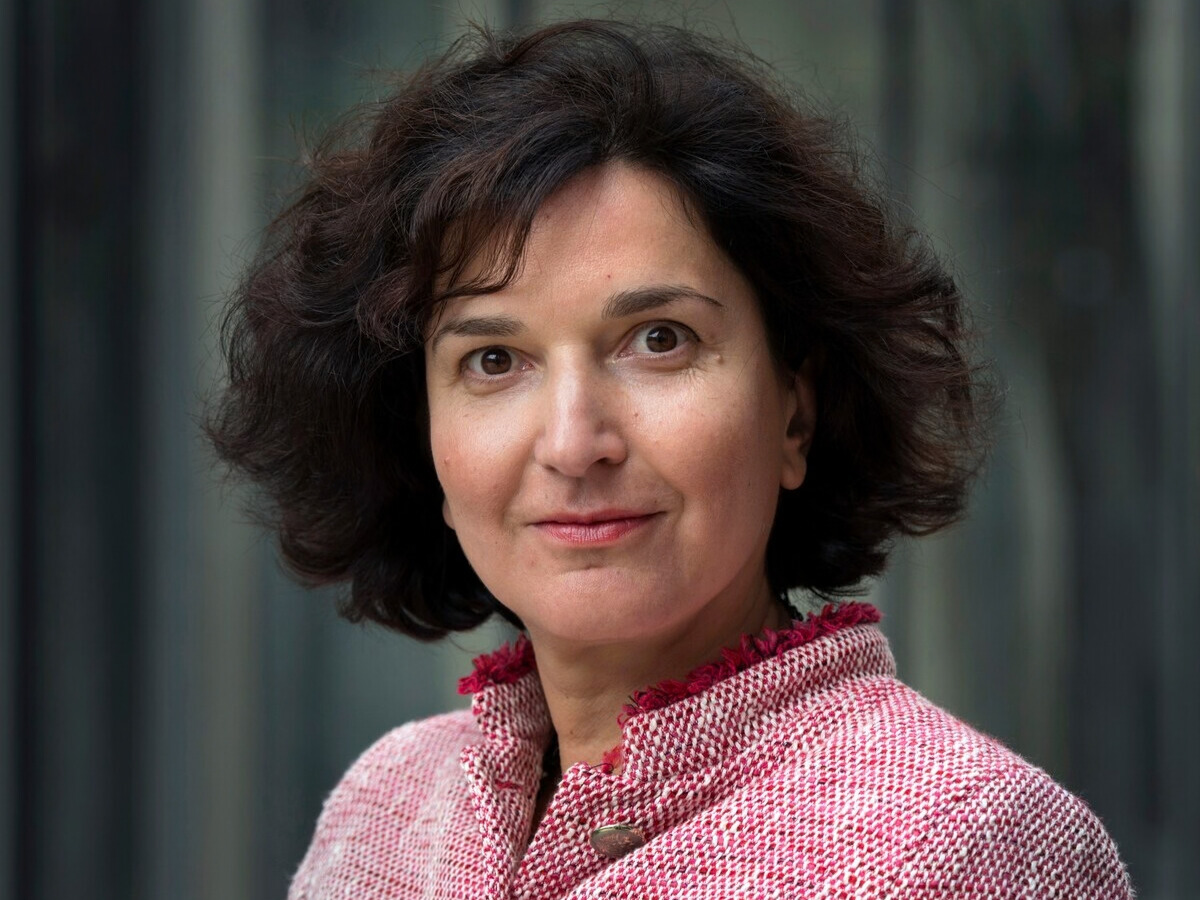
“Unless the European Union integrates more deeply it would become the playground of bigger powers.”
Interview with Antoaneta Dimitrova
Antoaneta Dimitrova is Professor of Comparative Governance at Leiden University’s Faculty of Governance and Global Affairs and the Institute of Security and Global Affairs in The Hague. Her research focuses on governance transfer across national borders, the effects of the European Union on democratic and market transformations in post‑communist Central and Eastern Europe, and the EU’s enlargement and neighbourhood policies. She has examined how the promotion of norms related to democracy, public administration reform, and specific policy areas shape domestic reform processes in candidate and neighbouring states, including Ukraine, Belarus, and Moldova.
She has co‑led major research initiatives, including the MAXCAP project on EU integration capacity and the Horizon2020 EU‑STRAT project assessing EU policy in Eastern Partnership countries. She serves on the Steering Committee of Leiden University’s interdisciplinary Europe Hub and is a member of the European Integration Committee of the Netherlands Advisory Council on International Affairs (AIV). Professor Dimitrova was awarded the Casimir teaching prize at Leiden’s Faculty of Social and Behavioural Sciences in 2010.
O. Kandyuk: The Big Bang enlargement of 2004 has been much interpreted as a “critical juncture.” Do you consider 2022 to represent a critical juncture capable of transforming the very model of European integration?
A. Dimitrova: That is a great question. To be honest, we do not have the answer yet. That is the short answer.
To elaborate, the problem is what we consider a “critical juncture” definitionally. I have looked into this in some recent publications. One aspect of a critical juncture is that actors take unprecedented decisions over a policy that has been moving in a particular path-dependent way, and then the policy changes direction.
Initially, this led many of us to think that granting Ukraine candidate status as a response to the war was a “critical juncture”. But when you look at what has happened in the last years, and how enlargement policy has actually developed, it is still doubtful whether this is a real critical juncture in the sense that enlargement or European integration would now be done completely differently.
A lot has changed, but a lot has also stayed the same. Member states have stuck, or continue to stick, to the same enlargement rules, constraints and guidelines. In other words, this has the potential to become a critical juncture. But if we are honest, we will probably know only in another five years.
O. Kandyuk: How do you assess the current “geopolitical” logic of EU enlargement: does security strategy now prevail over the traditional reform-and-conditionality methodology, or does the classical methodology still remain at the core of the process?
A. Dimitrova: We are in a constant switch between the two. It depends on the level at which you look.
There is a global level at which we can say geopolitical logic prevailed and led to Ukraine being granted candidate status and brought close to opening negotiations.
But at another level, if you look at who has opened clusters and who is actually close to concluding a treaty, enlargement is still very much following the normal logic and method of enlargement as amended in 2020. The geopolitical logic is very prominent at the rhetorical level, but that is not necessarily what the EU is doing in terms of policy.
There is the possibility that it could prevail if Ukraine were to receive some kind of special offer of reduced membership.
O. Kandyuk: From my point of view, the 2004 enlargement was also geopolitical to a certain extent.
A. Dimitrova: Yes, exactly. It depends on what you mean by geopolitical. If we say it was driven by geopolitical impulses, then – yes. But if we mean a ‘geopolitical’ logic of enlargement that disregards the normal structure of negotiations, adherence to the Copenhagen criteria, benchmarks and assessment, then the answer is no.
We are still following the normal method and logic of negotiations. The evidence is that Ukraine is not the only candidate. Western Balkan candidates are progressing very fast. Countries like Albania and Montenegro are quite far now in negotiations, and Moldova is close to starting as well.
O. Kandyuk: In your work on rhetorical action in a liberal international order in crisis, you argue that after 2022 EU enlargement began to be justified not only through normative arguments but increasingly through geopolitical ones. Do you believe this shift in rhetorics transforms the very nature of conditionality – from a transformative instrument into a tool of strategic stabilization?
A. Dimitrova: Not conditionality, perhaps – enlargement. I would be cautious about conflating conditionality and enlargement. Conditionality loomed large in previous research, but it is not necessarily the most important aspect of what the EU is engaged in now.
If we say that conditionality is the underlying method of enlargement – countries come closer to the EU when they fulfil requirements – and that rhetoric and geopolitics overlay that, then we can see that conditionality is under threat. You cannot have stabilising conditionality. By definition, conditionality says: if you do this, then you move closer to membership. It is as simple as that.
The only possible change would be that under the influence of security concerns we say, regardless of whether you have fulfilled everything, you are coming anyway. But that is not exactly what is happening. Conditionality itself remains the same. The question is to what extent the EU will stick to it.
O. Kandyuk: Considering the concept of integration capacity as the EU’s ability to absorb new members, what do you see as the Union’s core challenge today: external pressures (such as the war in Ukraine) or internal institutional constraints?
A. Dimitrova: Integration capacity is, by definition, internal. There is nothing external to integration capacity, because it concerns whether the Union can internally absorb new member states. External pressure may put integration capacity into the spotlight, but it is not directly part of it.
It is also important to note that the European Union is not currently speaking much about integration capacity as such. Instead, it speaks about the specific risks related to Ukraine and about the need for reform. In substance, however, this amounts to more or less the same thing. The term previously used was “absorption capacity,” which is perhaps more familiar.
The difficulty with this concept is identifying the areas in which the EU might be destabilised by future members. It is useful to note that areas considered potentially problematic during the 2004–2007 enlargement did not turn out to be problematic – for example, institutional functioning and the volume of decision-making the EU could produce. By contrast, areas that were not expected to be problematic, such as citizens’ responses to enlargement, became politically sensitive, particularly regarding labour mobility.
It is therefore fair to say that at present no one knows exactly where absorption-related problems might arise. That said, member states are aware that admitting a large country such as Ukraine raises specific concerns. One relates to Ukraine’s potential weight in the Council of Ministers, voting arrangements, and the number of Members of the European Parliament. The second major concern is Ukrainian agriculture – the size and structure of the agricultural sector in relation to the Common Agricultural Policy.
The Common Agricultural Policy is a long-standing EU policy, and Ukraine’s agricultural sector is globally famous. However, the two do not fit easily together. Even a brief look at what Ukraine produces – including under wartime conditions – and how it produces it, particularly the size of agricultural units in relation to subsidy structures, shows the difficulty. The design of subsidies under the Common Agricultural Policy suggests that absorbing Ukraine while including it fully in the CAP would not be feasible under current arrangements.
It is as simple as that. So, when we speak about absorption capacity, the main concerns relate to agriculture, the EU budget more broadly, and Ukraine’s future weight in the Council of Ministers.
O. Kandyuk: Do you believe that limited membership will solve these issues?
A. Dimitrova: Yes. A membership that excludes Ukraine’s participation in the Common Agricultural Policy would resolve a significant part of the problem. A membership that initially limits Ukraine’s voting participation in the Council – perhaps through observer status – would also address institutional concerns. However, such limitations, especially regarding decision-making, could only be temporary. When we speak about limited membership, we must ask: for how long? And is it acceptable to Ukraine?
O. Kandyuk: Do you that EU will choose the path of limited membership?
A. Dimitrova: At the moment, it is extremely hard to tell.
If we look at the preferences of the member states, the spectrum ranges from “yes, absolutely” to “no, not really.” It is a highly controversial issue. If the EU were to devise this kind of limited membership for Ukraine, it would change the logic of enlargement – not conditionality, but enlargement itself. It would also create difficulties for candidates that are currently negotiating under the normal method.
In other words, there are many voices within the EU, primarily among the member states, arguing that this is the only feasible path, because a promise has been made and support for Ukraine must be demonstrated, while at the same time full readiness for accession is lacking. At the same time, there are those who argue that this approach would not work and would compromise enlargement policy too much.
Honestly, I am quite certain that no one knows at this stage whether such an approach would work, or whether it will be pursued, with any degree of certainty. Much depends on international developments. If there is no ceasefire, no form of membership will be offered. What the EU can realistically offer in the near term is negotiations. However, that may not correspond to public expectations in Ukraine.
O. Kandyuk: Does the Ukrainian case support the hypothesis that widening and deepening are no longer opposing processes, but increasingly mutually reinforcing dynamics?
A. Dimitrova: I think this is, in any case, a wrong assumption. I don’t think it is even a hypothesis; it is an assumption that is simply incorrect. If we look back, all enlargements have given the EU an impulse to deepen. There has been no enlargement without some form of deepening. So widening and deepening always go together.
The problem is that they do not go together in the rhetoric of those who are against enlargement. There is a rhetorical reality in which a number of politicians argue that first we need to put our own house in order, and only then can we enlarge. That is the dichotomy – that is the contradiction.
But in actual fact, if you look at the reforms connected to every round of enlargement, the only difference concerns timing: do they happen before accession, or do they happen immediately afterwards. The EU has always adjusted the process of European integration when new members joined. And this will be the same with Ukraine. There will be adjustment; there will be reform.
The real question with Ukraine – or with any of the current candidate countries – is whether these reforms will take place before accession, partly before and partly during, or before and after enlargement.
O. Kandyuk: Should reforms happen before the enlargement? And if so, how much time it will take?
A. Dimitrova: This is the “golden question” for policymakers.
Reform can be minimal – adjustments to the budget and the Common Agricultural Policy. It can be mid-level – recalculating votes and adjusting parliamentary representation. Or it can involve treaty reform. It depends entirely on how much urgency member states feel.
For full membership, reform of the budget and distributive policies such as agriculture would likely be necessary before Ukraine joins – unless limited membership with exclusions is chosen. With limited membership, reforms could potentially be postponed.
O. Kandyuk: You argue that the EU–Ukraine Association Agreement exerted indirect effects on the EU itself. Could you elaborate on which specific institutional innovations within the EU became necessary as a result of this agreement?
A. Dimitrova: It is a very complicated question, because one could also argue that it was the Euromaidan, the Russian annexation of Crimea, and the broader threat to Ukraine that forced the EU to introduce innovations. But, of course, the Association Agreement was at the heart of that conflict, so it is very difficult to separate the two.
I think the Agreement itself is already an innovation, because it is much more flexible than previous agreements. It allows for a variety of adjustments that the EU did not previously have. Then there were various organisational innovations introduced to support Ukraine, which are not directly driven by the Agreement as such. But again, the Agreement has to succeed.
So I would say that the original idea – that the DCFTA represents a viable model of association, everything but the institutions – is becoming somewhat outdated. In the sense that it is the institutions that Ukraine now seems to want, rather than access to the internal market, for which Ukraine has not fulfilled the necessary adjustment conditions.
In that respect, one could argue that the Agreement is almost reaching its limits, in the sense that what it offers is something Ukraine currently does not have the capacity to implement fully.
O. Kandyuk: If we consider the Deep and Comprehensive Free Trade Area as a model of deep integration without membership, has the Ukrainian case revealed the limits of such a model? Where precisely did the institutional insufficiency of “integration without membership” become apparent?
A. Dimitrova: I would not say there is an institutional insufficiency of the model itself. The insufficiency lies in the fact that Ukrainians want more. So it is a political demand. And the second problem is that the conditionalities guarding access to the internal market, which are contained in the Agreement, have clearly not been fulfilled on the Ukrainian side – whether because of the war, or because the threshold in terms of administrative, organisational, and harmonisation capacity is extremely high.
So the model is, on the one hand, too complex for the Ukrainian administration; and on the other hand, the political aspiration is directed toward something different. In that sense, I think hardly anyone is still speaking about the DCFTA as a long-term model – and you can observe the same issue in the case of Moldova.
O. Kandyuk: Drawing on your analysis of democratic backsliding in Central and Eastern Europe – where post-accession backsliding occurred despite extensive pre-accession adaptation – which institutional safeguards should be embedded already at the negotiation stage with Ukraine in order to minimize the risk of a similar сases as Hungary or Poland?
A. Dimitrova: Unfortunately, I think there is no institutional safeguard that can fully prevent this. Because anything the EU could create on its side that would be truly effective would essentially replace domestic democratic checks and balances. And that would mean constructing some kind of external exoskeleton for a democracy.
I think this question starts from a misunderstanding that is very common – namely, that Hungary and Poland experienced backsliding because the EU did or did not do something during the pre-accession period. That is not the case.
The backsliding was entirely domestically driven. And in that sense, the EU can do many things, but it cannot fix a democracy. Institutional safeguards could theoretically be designed to make accession more reversible. But that would require treaty change, allowing the EU to more easily suspend or even expel a member state that becomes undemocratic.
The simplest solution might be lowering the voting threshold under Article 7 for depriving a country of its voting rights. But, realistically speaking, this is not on the table, and most of what has been attempted so far has had only limited effect. The real safeguards will not be institutional – they will be rooted in civil society.
And in that respect, Ukraine may actually be a promising case, because one can expect Ukrainian civil society to be very active in enforcing existing provisions, both in EU law and in Ukrainian law.
But we should have no illusion that the EU can fully fix a democracy. That is neither its purpose nor its capacity.
O. Kandyuk: In your work on framing international cooperation, you demonstrate that support for the EU depends heavily on interpretative frames. How has the framing of European integration in Ukraine evolved – from economic modernization to an existential choice? And is such a frame sustainable in the long term?
A. Dimitrova: What we showed was actually slightly different in our work on framing. It was mostly that which frames work depends on people’s prior beliefs. That was the finding of our experimental work in Ukraine. And that also means you cannot endlessly tweak one frame or another – It depends on what resonates, what prior beliefs people hold.
What this means is that these new emerging frames you mention – the existential choice and modernization – are themselves emerging from the reality that Ukraine has experienced, from economic challenges to war. And I think they will persist.
But the existential choice frame, of course, is very dangerous. It is used by politicians because, if they frame accession in the short term as an existential choice for Ukraine, and the EU is not able to accept Ukraine – because Ukraine is far from fulfilling the Copenhagen criteria – what does that mean for Ukraine’s existence?
I think these frames arise spontaneously to a significant extent, based on a variety of factors. They are not simply constructed narratives. And I think they are quite long-lasting. I do not know if they are sustainable, and they are certainly not a very good tool for explaining accession to the Ukrainian public.
O. Kandyuk: How do you envision the long-term future of European integration: as a deeper political union or as a network of flexible agreements with neighboring states?
A. Dimitrova: I think the world we live in, and the demise of the international liberal order, means that unless the European Union integrates more deeply – politically and in defense, maybe not the whole EU – It would become the playground of bigger powers. So I think a political union is on the cards, whether the member states have the courage and the ability to establish it.
But a network arrangement is unlikely within the union. It might, however, reflect the multipolarity outside the union.
O. Kandyuk: In light of contemporary challenges (global instability, authoritarian influence, migration pressures), can the model of European integration as it stood in 2026 prove both successful and scalable to other regions?
A. Dimitrova: Right now, one would be quite pessimistic about this, because it is a model that is by its nature the opposite of geopolitics and power politics. And the world is developing in a different direction. But I think it is sustainable for the EU, because despite this, it is very successful.
Any other region that tried to replicate this model would need to be under tremendous external pressure to do so. As we have seen, letting go of sovereignty is always difficult. It's difficult at the beginning and continues to be difficult.
And that is something the EU achieves only partially. In that sense, it is not an easy solution for other states where the experience of ceding even part of sovereignty does not exist. So perhaps this is the most difficult part of the EU model, because you don’t get the benefits if you do not do it – If you do not merge sovereignty into something else where part of the decisions can be delegated for longer periods to supranational institutions.
O. Kandyuk: What do you see as three or four possible scenarios for Ukraine’s European integration?
A. Dimitrova: The first scenario would be gradual integration, by which I mean the normal negotiation path being started, perhaps this year, and being concluded depending on the state of the war and the state of the country – let’s say within five to seven years with normal accession.
The second scenario would be further instability – and not in order of plausibility, of course – with perhaps severe blockages to the negotiations, creating a kind of permanent limbo, similar to what the Western Balkan states have been experiencing for a long time. This would mean even fewer reforms in Ukraine and even less willingness from the EU to admit Ukraine.
And of course, the third scenario is a very fast accession before 2030, but as a limited membership: a new form of political membership with very specific exclusions from policies and decision-making, which, according to Ukraine’s expectations, would fix Ukraine’s place in the EU, but would also require much more effort for full integration.
I think these are the plausible scenarios.