The very slow accession and integration process of Ukraine is, in fact, weakening the European Union
“The very slow accession and integration process of Ukraine is, in fact, weakening the European Union itself”
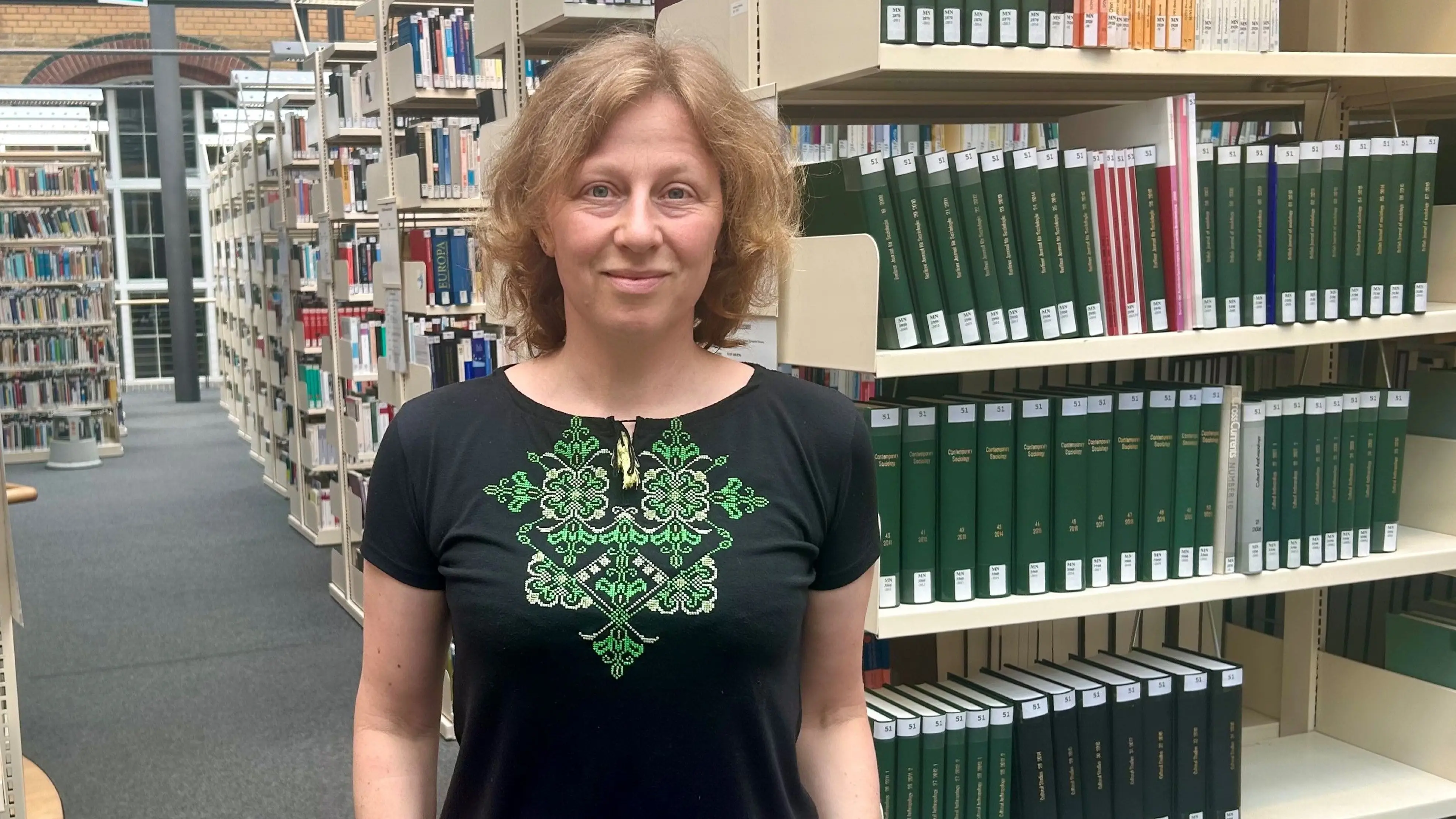
Interview with Susann Worschech
Susann Worschech is Scientific Coordinator of the Competence Network Interdisciplinary Ukrainian Studies Frankfurt (Oder) – Berlin (KIU) at the European University Viadrina. She is a leading scholar in the field of Ukrainian studies and political sociology, whose work advances the understanding of civil society, democratic transformation, and societal resilience in Ukraine and across Central and Eastern Europe.
Her research lies at the intersection of political sociology, Europeanisation studies, and area studies, with a particular focus on the transformative role of civic activism in times of crisis. She has made significant contributions to the study of Ukraine’s civil society, highlighting its agency, adaptability, and central role in processes of democratization, especially in the context of Russia’s war against Ukraine.
Worschech’s work also engages with broader questions of transnational networks, cultural diplomacy, and the societal foundations of democratic resilience, positioning Ukraine as a key case for rethinking established theories of European integration and democratic change.
She is the author and editor of several influential publications, including The Making of Civil Society (2018) and Freedom Stage: A Societal Portrait of Ukraine (2025), and her research has been widely recognised for its analytical depth, empirical richness, and policy relevance.
O. Kandyuk: Your theoretical model identifies three levels of Europeanization – institutional, cognitive, and relational – which can produce contradictory results at the same time. Where do you see the most real progress today and where is it most fragile in Ukraine?
S. Worschech: When it comes to European integration, the relational or societal dimension is where we see the greatest progress. Since at least the Revolution of Dignity, and even before, there has been a major shift in Ukrainian society towards European integration.
I found it very interesting when I was doing research on Ukraine’s prospects for EU integration a few years ago. Until the Revolution of Dignity, public opinion was roughly split—around 50% in favour of closer cooperation with the EU and 50% rather sceptical. At that time, it was more about cooperation than full integration. Still, there was already a strong presence of civil society actors – particularly organised civil society, NGOs, and so on—working on integration issues.
This was also visible in the arts and cultural sphere, which was very much pro-European, and this tendency has only increased.
Today, partly as a consequence of the war, we see a significant rise in interest in town twinnings, solidarity partnerships, and cooperation between EU societies and Ukraine. A great deal is happening at the local level. These exchanges and solidarity projects are particularly interesting.
For example, the number of town twinnings between German and Ukrainian municipalities has grown from around 50 to more than 250. That is quite remarkable. This is where close relationships are being built, and I believe they can be durable. There is strong interest on both sides in continuing these relationships. So this societal dimension is where we see the most substantial progress.
O. Kandyuk: If we turn to the institutional level – historically, you showed how President Kuchma used Europe largely as rhetoric without pursuing real reforms. But today, given that Ukraine is at war and reforms are difficult to verify, how can we distinguish real commitment from performative Europeanization?
S. Worschech: It is still quite difficult. There are major reforms underway, and we do see significant institutional progress.
However, there are two important developments to keep in mind. First, many of these reforms are largely driven by civil society. There is still no fully institutionalised political setting that consistently generates reform pressure. This is connected to the weakness of the party system. There is no real party competition rooted in society across local, regional, and national levels. Parties often function as vehicles for individual candidates rather than as programmatic organisations.
This creates a structural problem: how to institutionalise political will and societal preferences, and how to translate them into coherent political programmes and reforms. As a result, reforms are heavily demanded and supported by civil society. This is both a strength and, in a way, an unfair burden placed on civil society.
We therefore still see a lack of broader institutional democratisation, especially when it comes to internal democratic processes within institutions. There is still a lot of work to be done.
Second, if we look at indicators of Europeanization, we see clear progress, but also persistent challenges. Control mechanisms and cooperation processes within institutions remain problematic. There has been progress on key areas, and it is positive that these are being discussed, but implementing the acquis communautaire remains a long-term task.
At the same time, I think we need to shift perspective. It is no longer sufficient to look only at what is demanded from candidate countries. We also need to consider the European Union’s own transformation in light of enlargement.
European integration has increasingly become a matter of European security. Therefore, assessing a country’s readiness for membership must also include a security-based perspective.
This is why we are now discussing new approaches – such as step-by-step or partial integration. These models could allow for gradual integration, possibly beginning with formal agreements but without full voting rights at the outset.
These options need serious discussion, especially given the strategic importance of bringing Ukraine and also Moldova into the European Union as soon as possible. At the same time, we recognise that full integration into the internal market may still be difficult in the short term, as is also the case for countries like Albania.
O. Kandyuk: Following up on that, do you think staged or phased membership can manage the asynchrony between different levels of Europeanization in Ukraine? Or is there a risk it could lock Ukraine into a second-tier status within the EU?
S. Worschech: This is, of course, the major risk.
At the same time, I think the idea of staged integration is very interesting, because it can help countries that are not yet fully ready to participate in the common market to integrate gradually and to continue moving forward.
However, this model requires a very clear process and a strong framework for supporting further integration. There are, in fact, two main risks of getting stuck.
The first is being caught in an intermediate stage of integration, resulting in a system with different categories of membership – full members and some form of partial or staged members.
The second risk is being stuck in the accession process itself, as we have seen in the case of Turkey for many years. In that case, the incentive structure has largely lost its effectiveness –the idea that fulfilling all criteria will eventually lead to membership no longer functions as a credible motivation.
So we need to recognise clearly that there is a strong geostrategic, economic, and societal interest on the part of the European Union to include Ukraine, as well as Moldova and Albania.
From this perspective, staged integration can be an opportunity. Not every country is in the same position – if Iceland were to join tomorrow, it would likely become a full member immediately. But not all countries are Iceland, and policy approaches must reflect these differences.
Therefore, staged integration is indeed a promising model. But it must be accompanied by a clear benchmarking system, continuous support for progress, and ongoing political dialogue.
There also needs to be a detailed roadmap for increasing integration step by step. Most importantly, the possibility that the process slows down or that countries become stuck in a state of “half-integration” must be explicitly excluded.
O. Kandyuk: You point out that after a country joins the EU, "the Union's ability to promote its norms and rules weakens once the membership carrot has been consumed." What mechanisms should be built into Ukraine's accession negotiations right now to prevent this post-accession backsliding trap?
S. Worschech: I don’t think this is only a question of accession processes. It is also a broader question of how to deal with non-cooperative behaviour of individual member states. We already need a model for dealing with situations like Hungary during the Orban administration.
And of course, there is also the risk of democratic backsliding not only in Ukraine, but also in countries like Germany. We need to recognise that European integration needs to imply a stronger EU role in monitoring and ensuring democratic performance in individual member states.
I think this should be part of a broader European reform process. When we discuss whether the current voting system is still adequate, I do not think the solution is simply to exclude problematic leaders or “send someone like Orbán outside” while decisions are being made. That is not how we can deal with these countries.
There needs to be a clear commitment from every member state to a certain level of democracy, rule of law, and also market principles. But this has to apply equally to countries that have been members for many years or even founding members of the EU.
No country is immune to democratic backsliding. So in my view, this is not really a question of the accession process. Quite the contrary – it is about the quality of democracy within the countries themselves.
O. Kandyuk: Some analysts warn that making "political will" almost as important as the Copenhagen criteria and the Acquis is changing the very nature of the EU as an institution. As a sociologist of Europeanization, how do you assess this shift — is it a pragmatic adaptation to a new geopolitical reality, or does it erode the institutional logic that made enlargement work in the first place?
S. Worschech: I doubt that geopolitical logic is really taking first place, and that the EU’s actual role and responsibility are already fully understood by European leaders. In particular, if we look at policies rather than rhetoric, I think geopolitical shifts certainly force us to focus more on our European interests, our needs, and on how to strengthen the European Union also in terms of geopolitical power.
Maybe “power” is not a term we usually like to use for the EU, but we have to face these realities and think about how to strengthen the Union as perhaps the last remaining space of classical liberal democracy.
However, what is not yet fully understood or at least not yet translated into policy is that we need to think much more about maintaining cohesion among member states and about enlargement from a geopolitical perspective. That means we need to take security issues much more seriously. And from that perspective, it is actually in our own interest to have countries like Ukraine and also Moldova inside the European Union.
I do not think this is yet fully understood, because the EU has traditionally used the concept of power only in combination with “soft” – we are the soft power, the good guys, the friendly Europeans who are always on the democratic side. We are not used to thinking in geopolitical or military terms. These are habits that now need to be revised.
Of course, we also need to include security aspects in the future architecture of the European Union. That means discussing ideas like joint European military capabilities, pooling forces, or developing something like a European NATO.
And, frankly, it would be extremely dangerous not to include Ukraine in that framework. It would be more than just a mistake.
This shift in logic – what it means for Europe to either become a real power or to risk fragmentation – has not yet fully arrived in EU structures or policy thinking.
O. Kandyuk: Do you think this shift will eventually happen? Is there an understanding that simply needs more time or are we lacking something more fundamental?
S. Worschech: We do not have that time – that is the problem. And I remain quite sceptical about whether there is real readiness to fully understand this shift.
This is something that security experts and European integration scholars have been saying for a long time. But I do not have the impression that, either in the European Commission or in the European Parliament, this is truly understood and translated into action.
Maybe it is understood at a rhetorical level, maybe it is partially acknowledged, but I do not see concrete policies being implemented accordingly.
When it comes to Ukraine’s European integration, we sometimes hear speeches, but it remains largely rhetorical. There are working groups and discussions, but I do not yet see a clear sense that it is truly in the EU’s own strategic interest to bring Ukraine into the Union as fast as possible and to actively push for its integration.
At the moment, there is still this idea that the EU “allows” countries to join, rather than the idea that we actually want them in the Union. And it is crucial that this mindset changes – the sooner, the better.
I do not see this reflected in current policies. I also do not see strong party coalitions at the European level that are actively pushing this agenda forward, and cooperation among European countries both in the Commission and outside it too reluctant and does not fit the actual needs. See, for example, the failure of the Franco-German FCAS project to build a joint European fighter jet – such a failure is disastrous in these days!
And I think part of the reason is that this represents a paradigmatic shift. For political actors and for the Commission, such shifts take time. They are never instantaneous.
But at the moment, I do not yet see the political force or the institutional actor in Europe that is truly driving this transformation. And that is a serious problem.
O. Kandyuk: Your 2025 book Freiheitsschauplatz is a social portrait of Ukrainian society. In your observation, what is the single most misunderstood image of Ukraine in Western Europe and how does this misunderstanding get in the way of serious enlargement policy?
S. Worschech: Well, there are quite a lot of misunderstandings.
For a long time, Ukraine was still seen as ‘part’ of Russia although it never was in the last 100 years. And Russia itself was often treated as synonymous with the Soviet Union. In countries like Germany, people did not really speak about the Soviet army or the Soviets as such – it was always “the Russians,” “the Russian army” etc. This view is extremely Russocentric and denies Ukraine its autonomy.
So Ukraine was not really perceived as an independent entity, not even after 1991. Of course, people knew that a country called Ukraine existed, but there was very little broader understanding of what this independence actually meant.
On top of that, there has been a strong influence of Russian propaganda, which worked quite effectively – for example, promoting the idea that in places like Donbas, where people speak Russian, they are therefore “Russian.” This is, of course, a major misunderstanding.
But beyond that, there was also something like a blind spot. People were aware that Ukraine existed, but they knew almost nothing about the country – its language, culture, or history, or about the fact that much of the Second World War and the Holocaust took place on Ukrainian soil – and the responsibility that this entails for Germany. And there was also very little interest in learning more.
Ukraine was often perceived as a kind of backward post-Soviet entity. Ukrainians themselves were frequently portrayed – especially before the Revolution of Dignity – as associated with corruption, strange economic practices or poverty.
The significance of the three major Ukrainian pro-democratic revolutions – in 1990, 2004 and 2013/14 – has never been properly understood in Germany, which is an incomprehensible lack of empathy in a country that takes such pride in its own democratic revolution of 1989.
This combination of Russian propaganda on the one hand and a general lack of knowledge and interest on the other created a very strange situation. And then, in 2022, Ukraine suddenly appeared at the centre of European attention, and many people did not really know what they were looking at.
There was a lot of what I would call “mis-knowledge” or simply an absence of knowledge.
After 2022, interest in Ukraine clearly increased. People started reading more and paying more attention. But Russian narratives are still quite influential. Many people find it difficult to distinguish between the dissemination of knowledge and propaganda when it comes to Eastern Europe, and there are plenty of Knights of Lies out there.
And more generally, understanding political developments in Central and Eastern Europe has always been difficult, especially in Germany. Many people did not follow the transformation processes after 1989 nor the development of party systems or political structures.
For example, it is often difficult to explain that in many Central and Eastern European countries there are no strong traditional leftist parties, or that forms of nationalism in countries like Ukraine, Poland or the Baltic states differ significantly from what is understood as nationalism in Germany.
In these contexts, nationalism can mean a positive relationship to one’s own history, to struggles for independence and to statehood. But this distinction is difficult to convey.
The same applies to informal practices and civic responsibility. It is hard for people in Western Europe to imagine that during the Revolution of Dignity, thousands of people contributed in small, everyday ways – bringing food, volunteering in hospitals, staying on the Maidan for days, and then returning to their normal lives. Or that a revolution can last for months, with people living in the streets. Or what it means to live under conditions of war, occupation, and constant threat.
All of this makes it very difficult to understand what it means to be part of a society that has had to fight for its independence and continues to do so.
And if people do not understand Ukraine’s history or its present reality, it becomes much harder for them to grasp where this strong determination to fight for freedom and independence comes from.
This is something I tried to address in my book: to explain the roots of this commitment to freedom, democracy, and independence – even in a context where the political system itself may still be imperfect or not fully democratic. And I think this is precisely what is often difficult to understand in Western Europe – the strength of this societal drive to fight for a better future.
O. Kandyuk: You have been studying Ukraine for over twenty years. What has changed in your own view of the country since February 2022 and is there something you believed as a researcher that you have had to rethink?
S. Worschech: Let me start with what did not really surprise me.
What was not surprising is the level of self-organisation within Ukrainian society in response to Russian aggression. Of course, in the first days, I was very afraid that even this might not be enough. But it was clear to me that Ukraine would not simply surrender.
Given this long experience of fighting for independence, freedom, and democracy, it was very difficult to imagine that the country could be fully occupied and controlled by Russia as some people in the West suggested when they said Kyiv would fall within a few days.
Already at the beginning of the full-scale invasion, I wrote that Ukrainian society would not surrender. The capacity for self-organisation, for mobilising civil society against what is perceived as illegitimate power, is extremely strong.
So for me, it was clear that this would also shape resistance to Russian aggression – whether in defending the country or in organising resistance in occupied territories.
In that sense, this resilience per se is not surprising, even if it remains deeply impressive.
As for what has changed – it is actually difficult to say. In many ways, I see more continuity than rupture, especially in terms of civic activism and civil responsibility.
One thing that might hopefully be changing is the responsiveness of the political system to societal demands. But even this is not entirely new.
For example, during the anti-corruption protests last summer, it was very typical that people mobilised quickly against a problematic law. But what was notable was how quickly and clearly the political system responded and adjusted its position.
This increasing responsiveness is important, although, as we discussed earlier, there is still significant work to be done in terms of institutional reform and democratisation. Therefore, the question of sustainability and spill-over of responsiveness to other realms, as well as a general improvement of rule of law, accountability and checks and balances is an ongoing problem that needs to be solved.
What is certainly surprising is, without a doubt, the incredible learning curve and the pace at which Ukraine is driving innovation – not only in military and technical terms, and in terms of societal digitalisation and digital literacy, but also socially, administratively and in many other areas. Ukraine is not merely adapting to the conditions necessary for survival during the war, but is undergoing a massive process of transformation amidst the extreme conditions of the ongoing conflict. This is, in fact, the very essence of resilience: not merely adapting to disruptions and somehow coping with them, but changing in certain respects in order to preserve and protect other aspects – Ukrainian identity and statehood. We can study this core-periphery model of resilience in Ukraine as a virtually ideal-typical example.
O. Kandyuk: You are the coordinator of the KIU – the Competence Network for Interdisciplinary Ukrainian Studies in Frankfurt (Oder) and Berlin. How has the war changed the academic agenda of Ukrainian studies in Germany – what topics have moved to the center?
S. Worschech: First of all, unfortunately, it is also due to the full-scale invasion that we now see a greater readiness to finance Ukrainian studies in Germany. This support is still largely project-based and not yet very sustainable. For example, our project in Frankfurt, as well as the one in Regensburg, is funded for four years, but we do not yet know whether there will be any continuation.
At the same time, there is only now a clear willingness on the part of the federal government, ministries and foundations to support Ukrainian studies. – hopefully for more than only four years, as knowledge about Ukraine will remain extremely important for all of Europe, at least.
Another important change is that academic journals are now much more open to publishing work on Ukraine. Previously, when I submitted articles to journals that did not specifically focus on Central and Eastern Europe, it was often difficult to get them accepted. Ukraine was not seen as a particularly relevant or attractive case.
There are now more opportunities to publish, and also more funding opportunities. The number of projects related to Ukraine funded by the German Research Foundation has increased substantially. Before 2022, there were hardly any large-scale projects on Ukraine; since 2023, we have seen a strong rise in this area.
However, this type of project-based funding can be somewhat volatile – almost like “fast fashion” – and it is unclear how sustainable this trend will be in five or ten years.
At the same time, there is growing interest among students in learning Ukrainian and studying Ukraine more broadly. At European University Viadrina, we have established a certificate programme in interdisciplinary Ukrainian studies, which started this semester. It attracts students from different master’s programmes who are interested in Ukrainian history, society, political systems, as well as conflict studies related to Ukraine and Eastern Europe.
We also see this reflected in the number of applications, for example, to our PhD and fellowship programmes. There is clearly a growing demand for academic environments where Ukraine is studied in depth.
In terms of research topics, some areas show continuity. My own focus on civil society and democratisation became even more relevant, given increasing civil society and policy networks on and with Ukraine. But there are also important shifts.
One key development is the emergence of a serious debate on European integration and the reform of enlargement processes, with Ukraine as the most relevant case.
Another major shift is the growing importance of security studies combined with Ukrainian studies. It is actually surprising that this was not more prominent before 2022, even after the start of Russian aggression in 2014, when there were clear reasons to focus on security and European security in relation to Ukraine, but this was not widely reflected in academic or political debates. The fact that, at the time, Russia was not yet unequivocally perceived as an aggressor, but rather, in some quarters, as a ‘mediator’ in the Minsk talks or even – as in Germany’s case – as a partner, proved to be a fatal mistake.
We also see new perspectives in law and economics. Ukraine is increasingly analysed as a partner for economic cooperation, investment and mutual learning. From a legal perspective, the EU accession process itself has become an important field of study – its requirements, challenges, and differences compared to earlier enlargements, such as that of Poland.
This is particularly interesting because, while Poland can serve as a reference point, it is clear that there can be no simple “copy-paste” model for Ukraine.
Another emerging field is transitional justice. At Viadrina, we are working on establishing a master’s programme in this area together with a Ukrainian university. This includes questions of dealing with war, occupation, collaboration and rebuilding political and legal systems after conflict, violence and war.
Transitional Justice is a highly relevant topic that was not previously central to Ukrainian studies. Ukraine may even become a European key case for understanding how societies deal with both post-war justice and reconstruction, as well as criminal proceedings and strategic litigation, in order to hold those responsible for wrongdoing to account and to achieve not merely peace, but a just peace.
A topic that we are not working on at Viadrina concerns all issues related to infrastructure, defence technologies, and similar areas are becoming increasingly relevant. This is something very new for Ukrainian studies – It goes beyond the classical understanding of the field.
We are not a technical university as we do not have a technical or engineering faculty but we are in close contact with, for example, the Technical University Wildau who is very active in cooperating with Ukraine.
However, infrastructure and technical issues play a role when we speak about economic cooperation and also about security aspects.
From my personal perspective, this is particularly visible when we talk about civil–military cooperation, which is extremely interesting in the Ukrainian context. A large part of society is, in one way or another, affiliated with defence-related issues.
There are, for example, forms of citizen science – people collecting data on drones, troop movements, and other military-related developments, sometimes even identifying potential threats or suspicious activities.
More broadly, many people are engaged in defence in very different ways. This can include logistics, volunteering, or fundraising for the army.
To be honest, this is something that would be almost unthinkable in Germany. If I were to start an NGO to raise funds for the Bundeswehr, this would probably be met with some surprise. In Ukraine, however, this is completely normal, and I am convinced that there is a lot for us to learn from Ukraine.
The fact that, in Ukraine, it is part of the civic ethos to ‘roll up one’s sleeves’ and get stuck in during an emergency is an extremely fascinating area of research. We can also learn a great deal from how this affects social solidarity in the long term, as well as the subsequent standing of state institutions – probably not for the better.
O. Kandyuk: Finally, since I am working on scenarios, I ask this question to everyone: if you were to sketch three or four possible scenarios for Ukraine’s European integration, what would they be?
S. Worschech: This is very difficult to predict at the moment, because the process depends obviously not only on Ukraine, but even more on the European Union.
Despite all the ups and downs, Ukraine is clearly continuing on its path towards European integration. Given the strong public support, it is difficult to imagine that Ukraine could deviate from this course without a serious reason. Society is actively pushing the political system in this direction. The more uncertain factor lies on the EU side.
A positive scenario would be that the European Union recognises the strategic importance of Ukraine’s accession and moves towards a faster, possibly staged integration process – and that would be necessary not only for Ukraine, but also for Moldova and Albania.
In this scenario, the EU would not only place demands on candidate countries, but would also reform itself in order to accommodate enlargement more effectively.
However, I do not consider this scenario very likely at the moment.
We are currently in a highly dangerous situation in which Europe does not fully recognise the need to rely on its own capacities. The transatlantic relationship is becoming seriously uncertain, and Europe needs to build new alliances quickly.
But the EU is not designed for rapid decision-making. It operates through consensus, which makes it inherently slow and often hesitant.
There are also significant internal divisions. Countries like Poland and the Baltic states clearly understand the security stakes, while others – such as Spain or Portugal – are reluctant regarding enlargement and security transformation. At the same time, Poland, for example, is also afraid of Ukraine participating in the common market, and want to protect their farmers. So there is a great deal of ambivalence on the European side.
As a result, a more likely scenario is one in which the EU fails to adapt quickly enough to the new geopolitical environment. In this case, it may become less attractive and less open to countries like Ukraine, Moldova and Albania.
Paradoxically, this would weaken the European Union more than Ukraine.
And this is maybe the most likely scenario – that we are not fast and not clear enough in our decisions to build a strong Europe, which is exactly what is needed right now.
Because we see that Putin remains as aggressive as ever, trying to destabilise the whole region, working actively towards Europe’s failure and potentially at some point to move further, for example towards the Baltics or Poland, or at least to weaken Europe through military pressure and hybrid actions.
At the same time, the United States have, for now, stepped back for the next years, if not decades, and withdrew from a relationship of trust and cooperation. I don’t think many people have yet realised just how serious this is.
Even after the next presidential elections, it is by no means certain that relations between America and Europe will improve again – perhaps more predictable and less chaotic, but not fundamentally more pro-European.
So we must learn to stand on our own two feet and act independently. Yet that is precisely what I do not see happening in the European Union at present.
The extremely slow process of Ukraine’s accession and integration is, in fact, weakening the European Union itself. And it is precisely this scenario that I consider most likely – that we will remain in a very precarious situation as long as we are not prepared to carry out serious reforms. These reforms would include strengthening our internal democratic benchmarks to prevent democratic backsliding, reinforcing the common market while opening it at the same time, enabling forms of staged accession and developing a clear security policy so that the EU can act as a genuine security and geopolitical actor.
At present, however, this is still what I would call the ‘restraint scenario’ – the most problematic and perhaps also the most likely. Therefore, I can only hope that Ukraine will actively push for faster accession – for a sooner and more decisive integration process – so that it can take a seat at the table and begin to influence internal EU decision-making.
In many ways, Ukraine is clearer and more decisive than the European Union itself. And we may actually need this Ukrainian clarity and strength within the EU in order to better protect ourselves.