You can only count on yourselves. That’s the single most important lesson I would offer
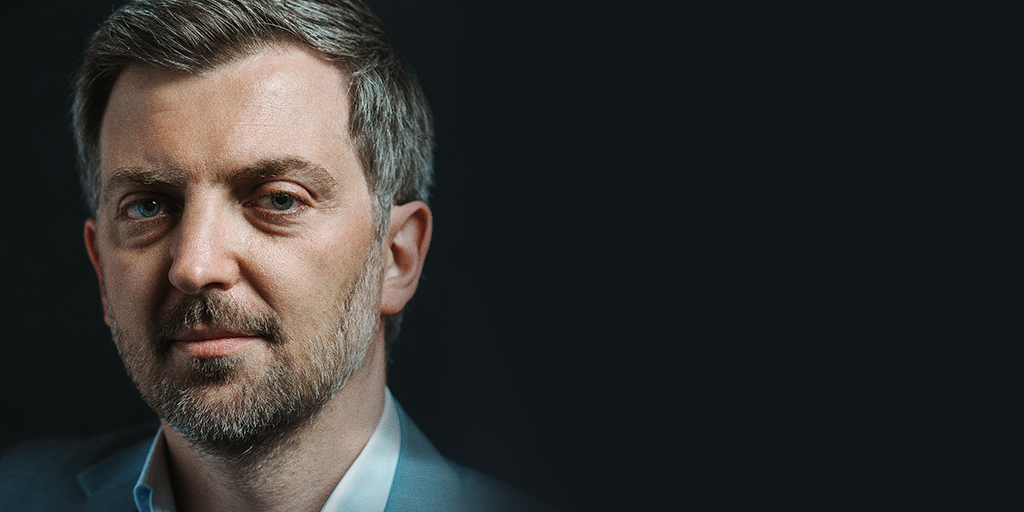
“You can only count on yourselves. That’s the single most important lesson I would offer. It means building internal cohesion, developing internal capacity and capabilities, fostering internal innovation. Because at the end of the day, no one else will do it for you”
Interview with Josip Glaurdić
Professor Josip Glaurdić is a leading scholar in the fields of comparative politics, post-conflict democratisation, and European integration, with a regional focus on Southeast Europe and the post-communist space. Based at the University of Luxembourg, where he holds a professorship in Political Science, Professor Glaurdić has gained international recognition for his work on the political legacies of war, transitional justice, and the dynamics of democratic development in the aftermath of violent conflict. His research offers deep empirical and theoretical insights into how war, memory, and state institutions shape electoral competition and political behaviour.
Professor Glaurdić was the Principal Investigator of the ERC-funded project Electoral Legacies of War (ELWar), which examined how experiences of war influence political preferences and institutions in postwar societies. He is the author of the acclaimed book The Hour of Europe: Western Powers and the Breakup of Yugoslavia (Yale University Press), a landmark study of Western diplomacy during the collapse of Yugoslavia. His scholarly articles have appeared in top journals such as Party Politics, Journal of Conflict Resolution, and East European Politics, where he explores the intersections of nationalism, justice, and democratisation.
Beyond his academic contributions, Professor Glaurdić is an influential voice in international debates on the future of Europe and the democratic resilience of post-conflict states. He has held fellowships and visiting positions at institutions including the University of Cambridge, where he was a Fellow of Clare College, and has contributed expert analysis to both scholarly and policy-oriented platforms. Through his research, publications, and public engagement, Professor Glaurdić has helped shape scholarly and political understanding of the enduring impact of conflict on democratic governance in Southeast Europe and beyond.
O. Kandyuk: In The Hour of Europe, you show how Western powers unintentionally accelerated the dissolution of Yugoslavia. What parallels do you see with the West’s reaction to Russian aggression against Ukraine after 2014?
J. Glaurdić: Quite a lot, to be honest.
First of all, there’s a great deal of wishful thinking. There’s this seemingly persistent inability of a complex union – like the European Union truly is – to come to terms with reality. You can still see that today, for instance, in how Europe assesses U.S. policy. Many people here are still unwilling or unable to fully accept the fact that, we’re not necessarily allies anymore. Our interests might overlap in some areas, but not always.
And in such a complex union, it’s understandably difficult to generate clear leadership. There are all these internal balancing acts, checks and counter-checks, different games being played – between member states, within domestic politics, and also internationally. Progress depends on someone being willing to name things as they are—to say that Russia is pursuing a specific policy with concrete aims. In the Yugoslav case, it took the same kind of recognition: that Milošević had a political strategy driving the conflict, and that ending the bloodshed meant addressing that strategy head-on.
But instead, we often see this ongoing policy drift – this feeling that, maybe if we just hold on to as much of the status quo as possible, things won’t get worse. That’s one pretty obvious similarity.
Then there’s another point, and while it applies less to Ukraine and Russia, it’s still present: this underlying idea that maybe it’s not unreasonable for a regional power to “control” its immediate neighbourhood. Many hesitate to say it openly when discussing Ukraine, yet quite a few still hold the view that Ukraine is, in effect, Russia’s backyard – or front yard, so to speak. From that perspective, it seems natural that Russia would be more invested in Ukraine than we are.
Mearsheimer and others have said this quite openly, but even beyond them, there are plenty of people who believe that. That, sure, Ukraine matters more to Russia than it does to us – so it’s not irrational that Russia would try to dominate it. That’s what great powers do.
We saw the same logic in the Balkans. Even today, many still argue that Serbia is the biggest player in the region, and because there are Serbs in neighbouring countries, we need to keep Belgrade on board and accommodate its interests. There’s this ever-present current of realism, or realpolitik that legitimises the idea of regional powers having a privileged sphere of influence.
But the real issue is that we often fail to confront these realities. If that’s the actual situation – and if those aren’t the outcomes we want – then the question becomes: what do we need to do to avoid them? And that question rarely gets answered.
O. Kandyuk: A key criticism of the EU in the Yugoslav context was its delayed response and lack of a coherent strategy before the escalation. In your view, how well did the EU and NATO learn this lesson when it comes to Ukraine—particularly after the full-scale invasion in 2022?
J. Glaurdić: Yes, I think there have been some changes, but they’re constantly being contested, as you’ve probably noticed yourself.
Take Operation Allied Force – the NATO intervention against Milošević in Kosovo. That was clearly a lesson drawn from what happened in Bosnia and Srebrenica. But what followed – Afghanistan, Iraq, and later the Arab Spring, Libya, Syria – all of that changed the atmosphere. Especially in the U.S., but also in Europe. Foreign policy establishments began to conclude that maybe Kosovo wasn’t a model to follow. Maybe it was a one-off. Maybe it doesn’t really work.
Then February 2022 came, and the response was swift. You got the Zeitenwende speech almost immediately. But very quickly, the question arose: what does Zeitenwende mean in practical terms? What exactly are we committing to? And now, you’re seeing people across the political spectrum – not just on the populist right – asking: do we really have to go this far? Do we really need to spend 3.5%, 4%, 5% of GDP? Is that the only way?
So yes, there’s more acceptance today that Putin’s Russia poses a systemic and strategic threat to European security. But that clarity is eroding. Over time, the sense of urgency has weakened.
If I had to put numbers on it – just for the sake of illustration – maybe in the spring or summer of 2022, we were at 90 out of 100 in terms of recognising the threat. Now it’s probably down to 77. But we should be at 100. These numbers are symbolic, of course, but they reflect a real trend: the loss of strategic focus over time.
O. Kandyuk: The failure of the EU in Yugoslavia was largely a failure in the security domain. How should the experience of the Yugoslav wars and the current war in Ukraine shape the debate on EU strategic autonomy in defence and security? Is it a sufficient response to American unpredictability and the Russian threat?
J. Glaurdić: No, clearly not. The current response, as it stands, is not sufficient. What we’re witnessing is essentially a continuation of short-termism – a reluctance to confront the structural implications of the war. The EU is, in effect, enabling a prolonged war of attrition in Ukraine, which many appear to accept as an inevitability. And that, to me, is astonishing. There is nothing inevitable about this situation – nothing about it is preordained. Every political structure and response is a human construct and therefore subject to change. The idea that we must simply accept this war as a long-term stalemate is not only fatalistic, it is politically and strategically irresponsible.
This kind of resignation – this passive acceptance of “how things are” – is itself a major obstacle. Yes, with the policies currently in place, a war of attrition is indeed the most likely outcome. But that is not a necessity. It’s a choice, albeit one made through inaction. And in the long term, it is a far more costly one – for Ukraine, for the EU, and for European security more broadly.
O. Kandyuk: But in contrast to the Yugoslav wars, the EU has shown remarkable unity in response to Russia’s full-scale invasion. Doesn’t that indicate at least some fundamental shift in threat perception or learning? Is this unity sustainable?
J. Glaurdić: Yes, let’s be clear – there was a strong, unified reaction in 2022. The invasion was condemned unequivocally across the political spectrum. But we also need to understand the nature of that unity. It was a moral and political reaction – “this is wrong, this is unacceptable.” That’s important, of course, but it is not the same as a strategic commitment to defending Ukraine or to reshaping the security architecture of Europe in a meaningful way.
If you ask people in Southeast Europe today, many will tell you: “If only we had received the kind of support Ukraine is getting now, the wars in the Balkans might have ended in 1991 or 1992 – perhaps without Srebrenica, without Dayton.” And they might be right. So yes, there has been some learning – but it’s incomplete and uneven.
In fact, the very institutional model the West eventually imposed on Bosnia – the Dayton framework – was the product of a particular mindset in Washington at the time. The idea was to institutionalise stalemate. And the consequences of that logic are visible to this day: Bosnia and Herzegovina remains paralysed by design. The political system was built not to resolve conflict, but to freeze it. And that’s precisely the danger now with Ukraine. Many in European capitals would, if given the choice, immediately accept a Dayton-style “solution” for Ukraine. If they could push a button and end the war by formalising territorial occupation and freezing the conflict, they would do it – no hesitation. They would gladly trade Ukrainian sovereignty for “stability” and move on to other priorities.
O. Kandyuk: Considering the Yugoslav experience and today’s challenges in Ukraine and the Western Balkans, is the EU repeating past mistakes – demanding political conditionality without a clear strategy for integrating complex, post-conflict societies and without offering sufficient "intermediate" incentives? How can the process be made more effective and secure?
J. Glaurdić: Absolutely. The EU mishandled the Western Balkans – and that’s widely acknowledged. The core of the problem lies in the approach to Serbia. Serbia remains the principal destabilising force in the region: in Kosovo, in Montenegro, in Bosnia and Herzegovina. And yet, key figures in Brussels continue to indulge Belgrade. Leaders like Ursula von der Leyen appear perfectly comfortable propping up the Vučić regime, despite its increasingly authoritarian tendencies and regional obstructionism.
The assumption that progress in the region depends on keeping Serbia “on board” is deeply misguided. It reflects a form of historical relativism that borders on denial – justifying Serbian obstructionism on the grounds that Serbs were somehow collectively victimised by the dissolution of Yugoslavia. As if the real issue were that “we took Kosovo away from them,” or “we broke Yugoslavia.” That’s absurd. It ignores the attempted genocide in Kosovo and the orchestrated campaigns of ethnic cleansing. And yet this logic – that we must avoid repeating Versailles – persists. But this isn’t Versailles. It’s World War II. And you're essentially offering a deal to the Nazis.
That logic produced a deeply dysfunctional institutional setup in Bosnia, which remains effectively paralysed. It facilitated the destabilisation of Montenegro. And it has left Kosovo in a state of perpetual insecurity. The treatment of North Macedonia – especially the name issue – was nothing short of grotesque.
The deeper problem is this: many in European capitals do not actually want Southeast Europe in the EU. Not under current institutional rules. Not with unanimity voting. Not with the financial implications of cohesion funds. Not with the prospect of more migration. Not with more labour market competition. They don't want another Fico. They don't want another Orban. Privately, they would say no.
What we have, then, is a kind of political kabuki theatre. A procedural performance that maintains the appearance of a path to membership. Meanwhile, authoritarian leaders in the region – especially Vučić – have adapted perfectly. They play the game. They speak the language of European integration while simultaneously aligning with Russia, China, and others. And everyone pretends this is a functioning accession process.
When it comes to Ukraine, conditionality is there as a bureaucratic and institutional solution that allows the Europeans to say, you can't join yet. Conditionality remains the EU’s default tool – and in many ways, it’s a convenient bureaucratic mechanism. It provides a rationale for deferring integration, while avoiding the real reasons – namely, the unresolved war, the ongoing threat from Russia, and the unwillingness of some member states to assume the risks that Ukrainian membership entails.
It’s not that the conditionality itself is unreasonable. But we need to be honest about how it’s being applied. Throughout the history of enlargement, conditionality has been a moving target. Criteria shift. Countries comply one year, only to be told the following year that new conditions must be met. If the geopolitical situation changes, candidate status can appear or disappear.
In Ukraine’s case, conditionality is being used to mask a deeper hesitation. If the security environment were different – if the war was over, or if Russia’s threat was somehow neutralised – I suspect the conditionality would be significantly softened. As long as that’s not the case, it will remain a convenient way of saying: “Not yet.” And that, fundamentally, is a political choice masquerading as a technical process.
O. Kandyuk: Your work on Yugoslavia highlights the risks of marginalising regions. Doesn’t the “multi-speed Europe” model create the risk of a new, institutionalised peripheralisation of Eastern Partnership and Western Balkan states, potentially undermining continental stability?
J. Glaurdić: It does. I’ve never supported the concept, not least because it originated in French political thinking – and quite frankly, a number of French institutional ideas have historically led Europe in the wrong direction. The Common Agricultural Policy is a case in point: a structurally distorting policy framework that has locked in inefficiencies and unequal development for decades.
We saw similar thinking at the end of the Cold War. While Václav Havel and others were articulating a vision of a “common European home” – a genuinely unified continent – figures like François Mitterrand were proposing an alternative: a differentiated Europe, with core and periphery. The logic was, “we’ll offer you some kind of association, access to certain benefits, but full membership or full integration – well, perhaps in 500 years.” That vision of Europe – fragmented, hierarchical, a la carte – was and remains deeply problematic. It institutionalises division rather than overcoming it.
At its core, Europe is a single cultural, political, and historical space. The only meaningful way forward is through unity. Anything else risks reproducing the kind of marginalisation and exclusion that fuelled instability in Southeastern Europe in the 1990s.
Now, to be clear, there is a real institutional problem at the heart of the EU: the unanimity requirement. It paralyses decision-making and prevents the Union from adapting to crises. But the irony is that, to remove unanimity, you need unanimity. So unless we see a burst of institutional creativity, the system remains gridlocked.
Some have proposed models like “Europe 2.0,” but I’m not a constitutional scholar. That said, if you ask me directly what I would propose, I’d say: qualified majority voting on key strategic issues. That would remove the need for a multi-speed framework altogether. We could then build coalitions around substantive policy aims, not around arbitrary inner and outer circles.
If someone could deliver that, I would support it unreservedly. But I remain unconvinced that the political will exists.
Now, hypothetically, a multi-speed Europe could function – if the barriers to entry into the “core” were genuinely permeable. If countries could opt in without being subjected to endless conditionality or opaque criteria. If, say, Germany, France, the Netherlands, Belgium, the original EU-15, perhaps with Slovenia and Croatia – and likely Poland – formed an initial core, and the others had a clear, open path to join once domestic politics permitted, then maybe such a model could serve as a transitional solution. But even then, it should be understood only as a temporary mechanism – not a permanent architecture. Otherwise, we risk building a new version of institutionalised marginality.
O. Kandyuk: You have mentioned the risks of “integration existentialism” – when a country aspires to EU membership but is unprepared for reforms. How can this paradox be avoided?
J. Glaurdić: Well, the thing is – some reforms are painful, especially those related to subsidies or economic structures that protect specific segments of society. These reforms often lead to increased competition, the elimination of preferential access to markets or public positions, and thus create resistance from entrenched interests. That’s just the reality.
But overall, these changes are beneficial. They push the country toward more competent governance, toward a less corrupt and more capable administration. The real challenge is whether political leadership can shield itself from those special interest groups – those who benefit from the current distortions and who will try to obstruct or delay reforms.
Ukraine today, like Croatia before, it does not operate under a fully functioning capitalist system. It’s distorted – by political influence, corruption, clientelism. That said, it is evolving, albeit imperfectly, in the right direction. The key is whether leadership can withstand pressure from those trying to preserve privileges throughout the integration process.
Is it possible to avoid this existential tension? It is. Is it difficult? Extremely: time-consuming, politically costly and often frustrating. But ultimately, Ukrainian society will benefit from the effort.
O. Kandyuk: You noted that Croatia faced a “reform reflexion” problem after accession. Can Ukraine avoid a similar outcome?
J. Glaurdić: It’s true that, after accession, there was a sense in Croatia of “we made it, now we can go back to old ways.” You could draw it as a curve – progress up to accession, then a dip. But the broader trend, I’d say, is not negative. Maybe not as good as it could be, but still going in the right direction.
In Ukraine’s case, yes – something similar could happen. But frankly, that’s not the problem you deal with right now. It’s something to think about later. As my great-aunt used to say: “Each day has enough of its own worries.” You have to get there first before worrying about what happens after.
O. Kandyuk: You have studied nationalism as a destructive force in the breakup of Yugoslavia. How would you assess the role of Ukrainian nationalism since 2014? Can it be seen as a constructive, consolidating force in the face of external aggression, or does it pose long-term risks to internal unity?
J. Glaurdić: I don’t have an inherently positive or negative view of nationalism – it always depends on the context.
At its core, nationalism is a liberal idea. It’s a liberal ideology, and like liberalism or socialism, it can be a force for good or for ill, depending on how it is used and in what setting. Just like socialism – sometimes it’s exactly what a society needs. For instance, I think the United States today could do with a bit more socialism, given the extreme and growing inequality. In fact, I think Bernie Sanders is largely right about that.
But if you had asked me in the late 1980s whether Yugoslavia’s problems could be solved through more socialism, I would have said absolutely not. That wasn’t the answer. Nor was nationalism – at least not the kind of nationalism that emerged then. That kind of nationalism was destructive. But again, it’s not about the label – it’s about what you fill it with.
That’s the key point: nationalism comes in many varieties. It can be defensive, imperialist, irredentist, civic, inclusive, exclusive. It can foster patriotism and civic responsibility, or it can breed hatred and division. I’ve often thought it ironic that many of the most vocal nationalists in the Balkans since the 1990s have also turned out to be the most corrupt. If you truly love your country, shouldn’t that mean not robbing it?
So, in the end, it’s all about what you put into that bucket. Do you fill nationalism with civic duty? With anti-corruption? With inclusiveness? Or with resentment and grievance?
In the Ukrainian case, since the start of the full-scale invasion, I think nationalism – if we want to call it that – has mostly been a force for good. One of Putin’s gravest miscalculations was underestimating the depth and resilience of Ukrainian national identity. He failed to grasp just how committed Ukrainians are to defending their homeland, their communities, and their way of life. And compared to what Russia is offering – repression, destruction, denial of identity – it’s not surprising that this sense of belonging has only grown stronger.
So, in this context, yes – I would say Ukrainian nationalism has played a positive and consolidating role.
O. Kandyuk: If you could offer one piece of advice to Ukrainian policymakers based on your research on Yugoslavia, what would it be?
J. Glaurdić: You can only count on yourselves. Ultimately – 100 percent. That’s the single most important lesson I would offer. It means building internal cohesion, developing internal capacity and capabilities, fostering internal innovation. Because at the end of the day, no one else will do it for you.
If Croatia had waited for the West to solve its problems during the war, we likely would have ended up with a Dayton-style solution in Croatia too. The only reason we didn’t is because the leadership at the time correctly understood that the only path forward was to win – to build the necessary institutions, capacities, and foundations ourselves. That was their most crucial insight, and they acted on it.
That’s the core of my advice: you need to build the state from within. External actors can help, but they won’t do the heavy lifting. Europe, as much as it may seem like a partner, is not an alternative to self-reliance. Ukraine cannot afford to float between two empires – between the Russian imperial vision on one side and what might be called a potential European empire on the other.
And then you ask: what is each side offering? One offers violence, destruction, assimilation, and the erasure of identity. The other offers development, respect, security, and a place in a shared European home. The choice seems obvious.
But even so, the fundamental truth remains: you can only truly rely on yourselves.
O. Kandyuk: The last question that I usually ask all my speakers is about scenarios, what do you see as the most likely 3 or 4 scenarios for Ukraine’s integration into the EU over the next decade?
J. Glaurdić: There are so many variables in play that it’s incredibly difficult to predict with any certainty. Honestly, even a week ago – before Israel attacked Iran – I might have had a different reading of the geopolitical landscape. These things shift rapidly, and they affect everything, including the prospects for EU enlargement.
In a few days, I’m heading to the NATO summit, and frankly, is Donald Trump going to walk out of the NATO summit the way he walked out of G7? So much hinges on developments in the U.S. as well. All of this to say: the broader context is deeply unstable.
Now, drawing on the experience of Southeast Europe and the general trajectory of the EU itself, the most likely scenario – if I had to identify one – is a slow, halting process of accession. A kind of "trudging along": two steps forward, one step back; or sometimes, one forward, two back. It’s bureaucratically dense, politically cautious, and institutionally risk-averse. That’s the default mode of European integration, and I expect it to dominate unless something truly shifts.
That said, there is talk of this being a “Hamiltonian moment” for Europe. But the real question is: how long does such a moment last? Six months? A year? Two? These windows don’t stay open forever. And who is supposed to seize it? Macron? He lacks wide appeal. Merz? Doubtful. So even if the moment exists, there’s no clear actor with the vision and legitimacy to act decisively on it.
So again: the default outcome seems to be a geopolitical and institutional stalemate. Stalemate on the battlefield in Ukraine and a corresponding stalemate on its path to the EU. It’s a deeply frustrating and demoralising scenario – but also, unfortunately, the most realistic.
Now, could there be a breakthrough? Perhaps. For instance, if the U.S. were to become entangled in a larger conflict with Iran and it went badly, we could see a dramatic rift in the transatlantic alliance. That, in turn, could force the EU to finally realise that it must develop strategic autonomy – militarily, diplomatically, and institutionally. And perhaps then we would see a genuine renegotiation of what Europe is and where it’s heading. But we’re not there yet.
And crucially, none of this will move forward meaningfully unless the EU resolves the unanimity issue. Without addressing that structural bottleneck, I find it very difficult to imagine Ukraine being able to join. If that institutional reform does happen, things could accelerate. If not, I’m afraid the process will remain slow, conditional, and uncertain.